
Better suited for high-current, high-power charging and demanding station uptime requirements.
Practical for standard commercial fast charging where cost and maintenance simplicity matter.
Choose cooling by power level, current, ambient condition, connector load, and service model.
Cooling is a performance decision
Cooling design affects charging current, cabinet reliability, cable handling, station uptime, and long-term maintenance. Air-cooled chargers remain practical for many commercial DC fast charging applications. Liquid-cooled systems become more important as current and power level increase, especially where operators expect frequent high-power sessions and faster vehicle turnaround.
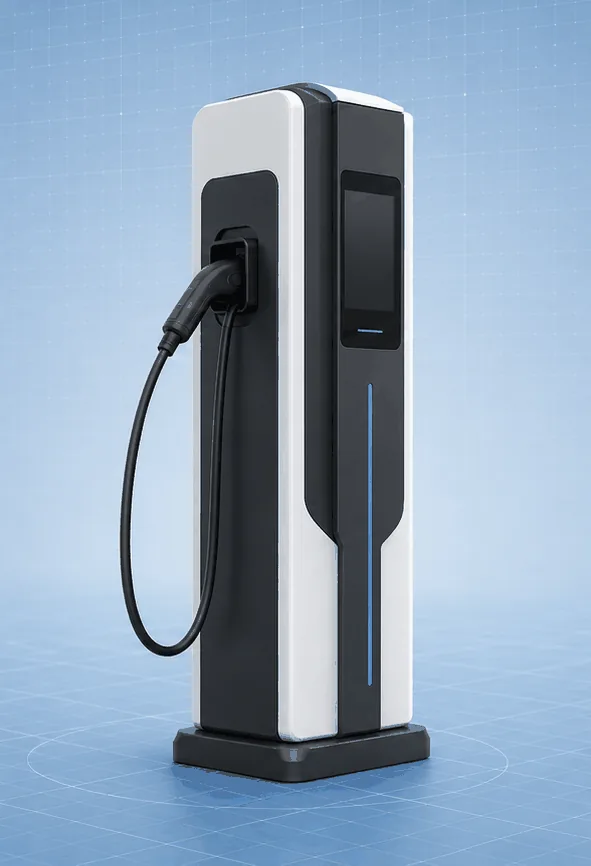
When liquid cooling makes sense
- High-power charging terminals serving fast-turnover vehicles.
- Sites where cable temperature, handling comfort, and current stability matter.
- Charging stations with demanding daily utilization and limited tolerance for downtime.
- Premium public charging hubs, fleet depots, and supercharging scenarios.
When air cooling remains practical
- Standard DC fast charging projects with moderate utilization.
- Commercial parking, destination charging, and export entry models.
- Sites where maintenance simplicity and cost control are the primary concerns.
How to discuss cooling in an inquiry
A good RFQ should mention target power, connector type, expected daily charging sessions, ambient temperature, installation location, and maintenance capability. Hifuture can then match charging terminals or integrated DC piles to the actual operating condition.
Frequently Asked Questions
Is liquid cooling always better than air cooling?
Not always. Liquid cooling is valuable for high-current and high-utilization stations, but air cooling can be more cost-effective for standard commercial fast charging projects.
Which Hifuture product is suitable for high-power liquid cooling projects?
The HCEVT-600C1 liquid cooling charging terminal is positioned for high-power charging scenarios where fast service and stronger thermal management are important.