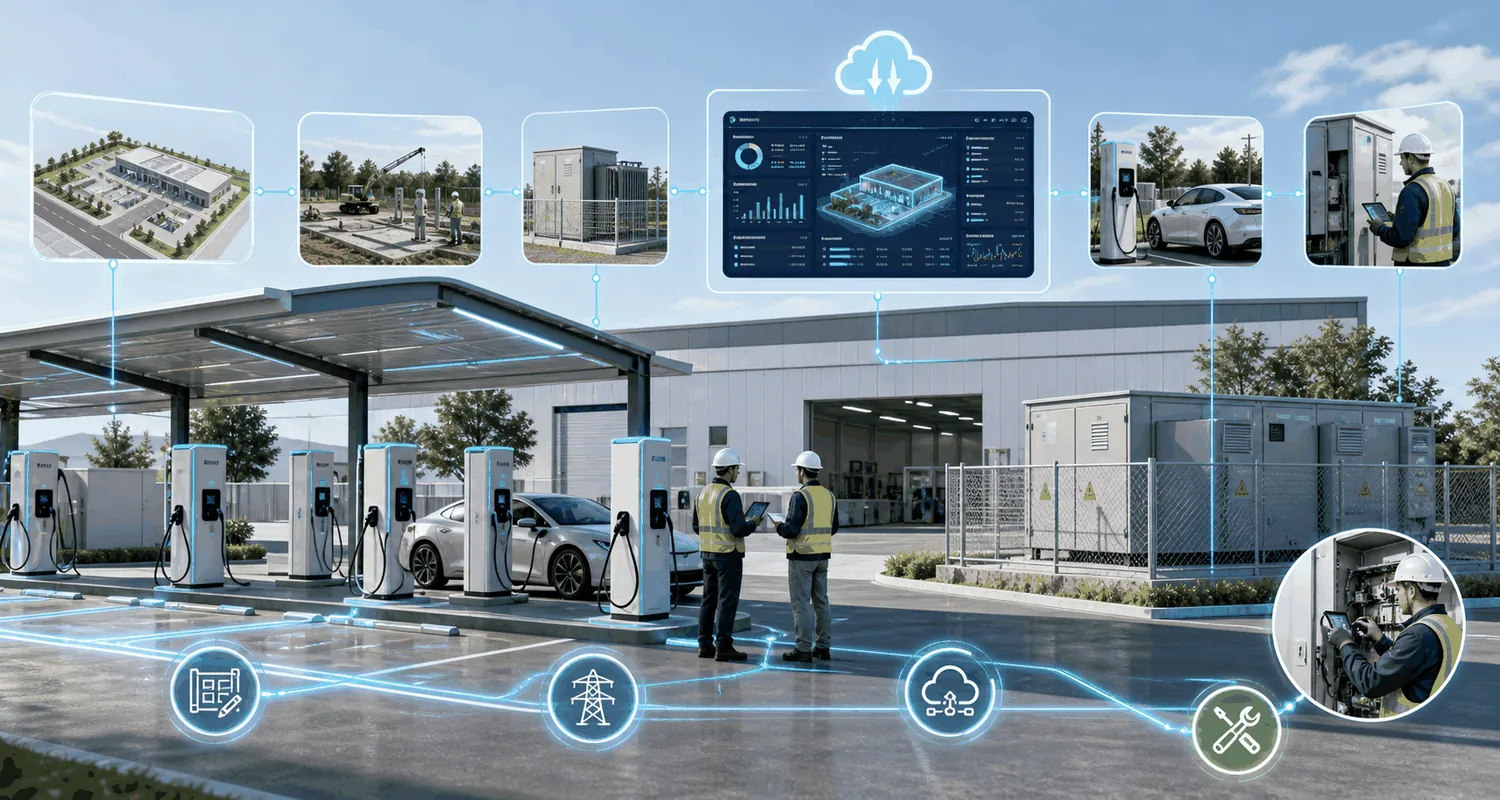
Operational flow, overnight dwell time, vehicle dispatch schedule, and service continuity.
Use centralized power, terminals, monitoring, and expansion planning to reduce future rework.
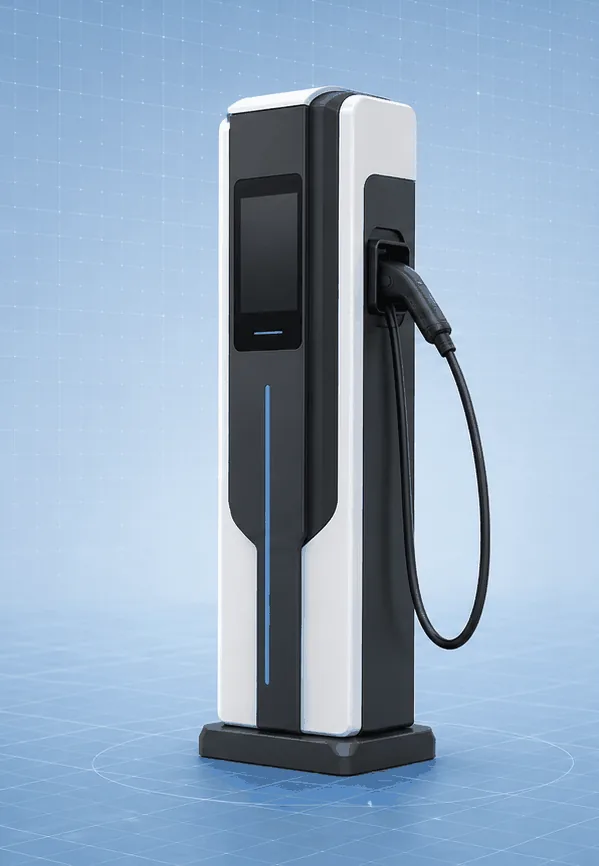
High-power terminals and ring charging stacks for flexible multi-bay energy distribution.
Depot charging begins with vehicle operations
A fleet depot charging project should start with routes, parking time, dispatch order, and vehicle energy needs. The charger layout must support the business process, not interrupt it. Buses, logistics vans, taxis, and service fleets all have different return times and charging windows, so the best design is based on duty cycle rather than a generic product list.
Key layout questions for fleet operators
- Vehicle schedule: When do vehicles return, how long do they stay, and which vehicles leave first?
- Parking geometry: Can charging cables reach safely without crossing high-traffic walking or driving paths?
- Power capacity: What grid input is available now, and what upgrade path is realistic?
- Charging priority: Should power be allocated equally, sequentially, or according to dispatch urgency?
- Maintenance access: Can service teams access cabinets and terminals without blocking depot operations?
Why flexible power allocation matters
Fleet depots rarely need every vehicle to charge at maximum power at the same moment. Flexible allocation can improve equipment utilization and help operators serve more vehicles with a practical grid connection. For larger depots, a centralized charging stack with distributed terminals can provide better scalability than isolated chargers installed one by one.
Frequently Asked Questions
What information is needed for a fleet depot charging quote?
Useful information includes vehicle type, battery size, daily mileage, parking layout, charging window, grid capacity, number of bays, and expansion plan.
Why use a ring charging stack for depots?
A ring charging stack can support flexible power allocation across multiple charging terminals, which is helpful for depots with many vehicles and changing charging priorities.